If you’re looking into affordable web design services for your UK business this year, knowing exactly what should be included is just as important as knowing the price. Too many small business owners end up with stripped-back sites that need expensive add-ons to actually function properly.
In 2026, over 65% of web traffic in the UK comes from mobile devices. Google now indexes the mobile version of your site first, which means if your website doesn’t load fast and display correctly on a phone, it’s not just a bad user experience, it’s actively hurting your search rankings. The baseline expectations have shifted, and what counted as a “bonus feature” three years ago is now just standard.
This guide breaks down the features you should genuinely expect when investing in a website for your local business, and flags the things that should raise a red flag if they’re not included.
Responsive Design: The Non-Negotiable Starting Point
Every website built in 2026 should be fully responsive, meaning it automatically adjusts its layout to fit any screen size, from a large desktop monitor to a small smartphone. This isn’t a premium feature, it’s the bare minimum. A responsive site uses flexible grids and fluid elements so nothing breaks or gets cut off on different devices. The alternative, a separate mobile version, is outdated and creates two sites to maintain. Any provider offering affordable web design services that doesn’t include full responsiveness as standard isn’t worth your time.
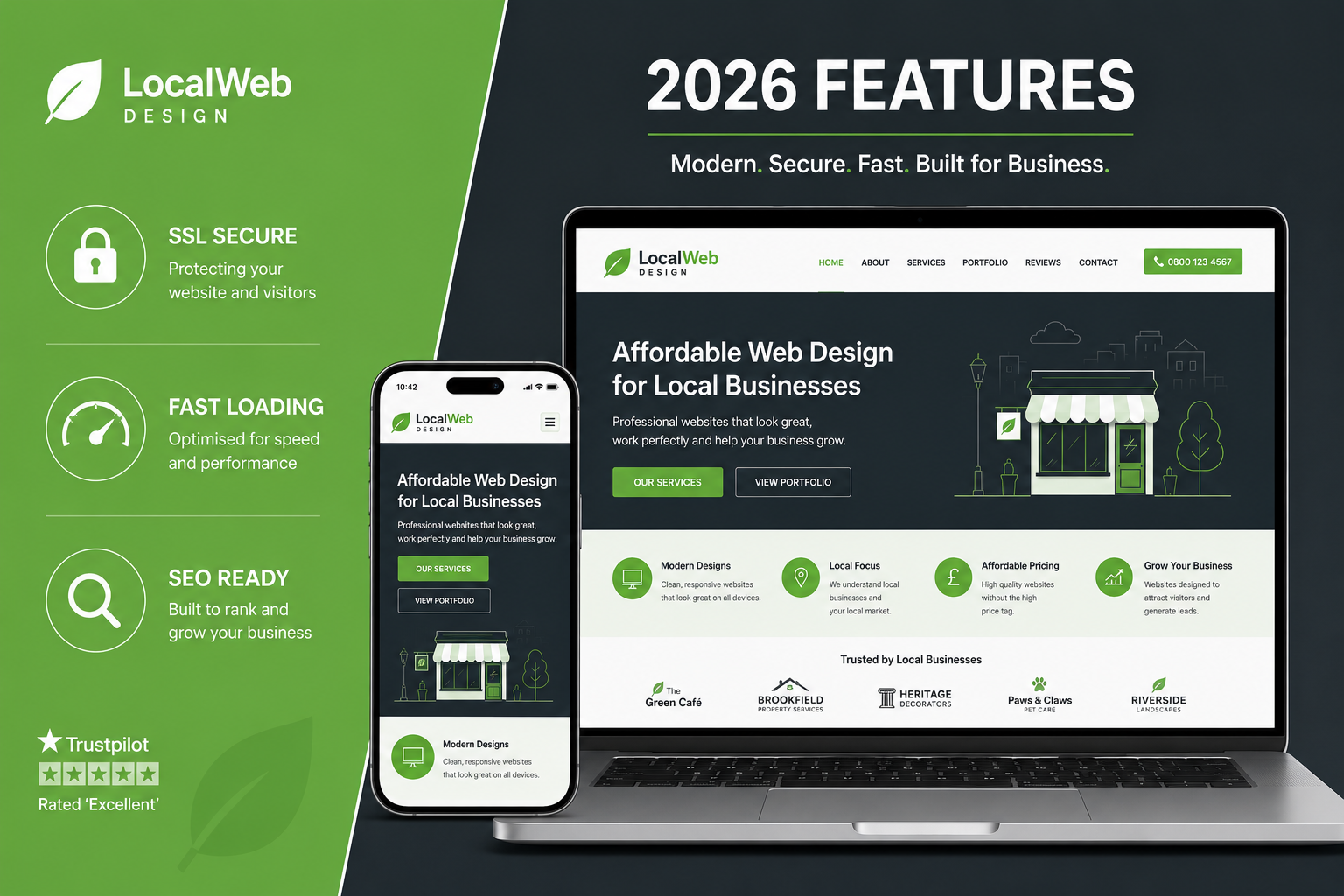
Mobile-First Layout
Designed for phones first, scales up to desktop. Google’s indexing starts here.
SSL Certificate
Encrypts data, builds trust, and is required by Google to avoid “Not Secure” warnings.
Speed Optimisation
Compressed images, clean code, fast hosting. Core Web Vitals directly affect rankings.
On-Page SEO
Proper heading structure, meta tags, alt text, and keyword placement built in from day one.
Contact Forms
Working, spam-filtered forms that send enquiries directly to your inbox.
WhatsApp Button
A floating WhatsApp button lets customers contact you instantly from any page.
SSL, Security, and Why They Matter More Than Ever
An SSL certificate is what puts the padlock icon in your browser bar and changes your site address from HTTP to HTTPS. Without it, Google Chrome and other browsers display a “Not Secure” warning to anyone visiting your site, which is enough to send most visitors straight back to the search results. Beyond the visual trust signal, SSL encrypts data exchanged between your site and visitors, which is legally relevant if you handle any personal information. In 2026, with data protection enforcement tightening further in the UK post-Brexit, this isn’t optional. Any package worth considering includes SSL free as standard, not as a £50 add-on.
Website Speed: What the Numbers Actually Mean for Your Business
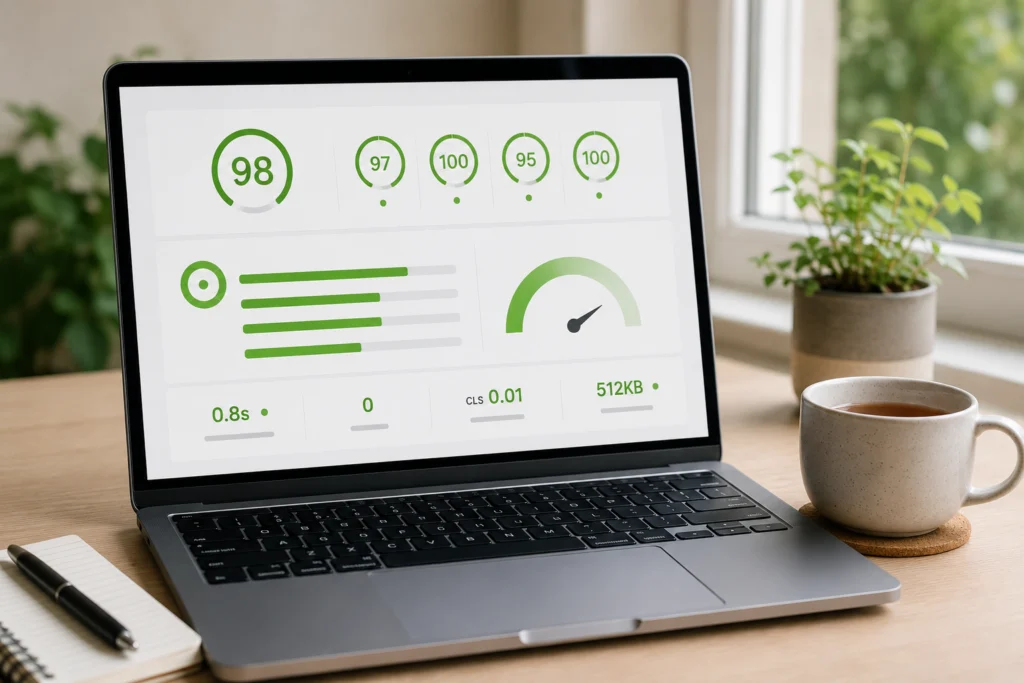
Google’s Core Web Vitals measure three things: how fast the main content loads, how quickly the site responds to a click, and how stable the layout is while loading. A slow site doesn’t just frustrate visitors, it ranks lower in search results regardless of how good the content is. In practice, speed optimisation means compressed images, minimal unnecessary scripts, a fast hosting server, and clean code. A well-optimised site typically loads in under two seconds on mobile, which is where most of your visitors are coming from. When checking out affordable web design services in the UK, always ask specifically about Core Web Vitals performance, not just vague promises about “fast loading.”
On-Page SEO: What Should Actually Be Built Into the Design
On-page SEO is not a separate service you buy after your site is built. It should be woven into how the site is structured from the start. This means proper use of H1, H2, and H3 heading tags, descriptive page titles and meta descriptions for every page, alt text on every image, clean URL structures, and internal linking between pages. It also includes things like a correctly configured sitemap and robots.txt file, schema markup where relevant, and making sure Google Search Console is set up and the site is submitted for indexing on launch day. Providers offering affordable SEO services for small businesses should handle all of this, not leave it for you to figure out after handover.
How UK Web Design Feature Sets Compare Across Providers
Most competitors in this space either hide features behind paid tiers or bundle them in ways that look complete until you read the small print. Here’s an honest comparison of what you actually get across different provider types for a typical small business website.
Table 1: UK Web Design Feature Comparison (5-Page Website, 2026)
| Feature | Budget Template Builder | Mid-Range Freelancer | Regional Agency | Cheap Website Designer |
|---|---|---|---|---|
| Responsive Design | Yes | Yes | Yes | Yes |
| Bespoke / Custom Design | No (template) | Sometimes | Yes | Yes |
| Free SSL Certificate | Paid plan only | Sometimes | Extra cost | Yes, included |
| On-Page SEO | No | Basic only | Quoted separately | Yes (x2 on 5-page) |
| Speed Optimisation | No | Varies | Extra cost | Yes (x2 on 5-page) |
| 12 Months Free Hosting | No | No | No | Yes, included |
| WhatsApp Floating Button | No | No | Extra cost | Yes, included |
| 12 Months Maintenance | No | No | Extra cost | Yes, included |
| Free Logo Design | No | No | Quoted separately | If required |
WordPress vs Custom Builds: Which One Should Local Businesses Choose?
For most UK local businesses, WordPress is the practical choice. It runs around 43% of all websites globally, has a huge ecosystem of plugins, and is straightforward enough to update yourself once handed over. Affordable WordPress website design services give you a platform that’s flexible, well-supported, and built for SEO. Custom-coded sites have their place, mainly for businesses with very specific functionality that WordPress can’t handle, but they cost more, take longer to build, and require a developer every time something needs changing. For a local tradesperson, restaurant, or small retailer, WordPress paired with a well-optimised theme is almost always the better investment.
eCommerce Features: What to Expect if You’re Selling Online
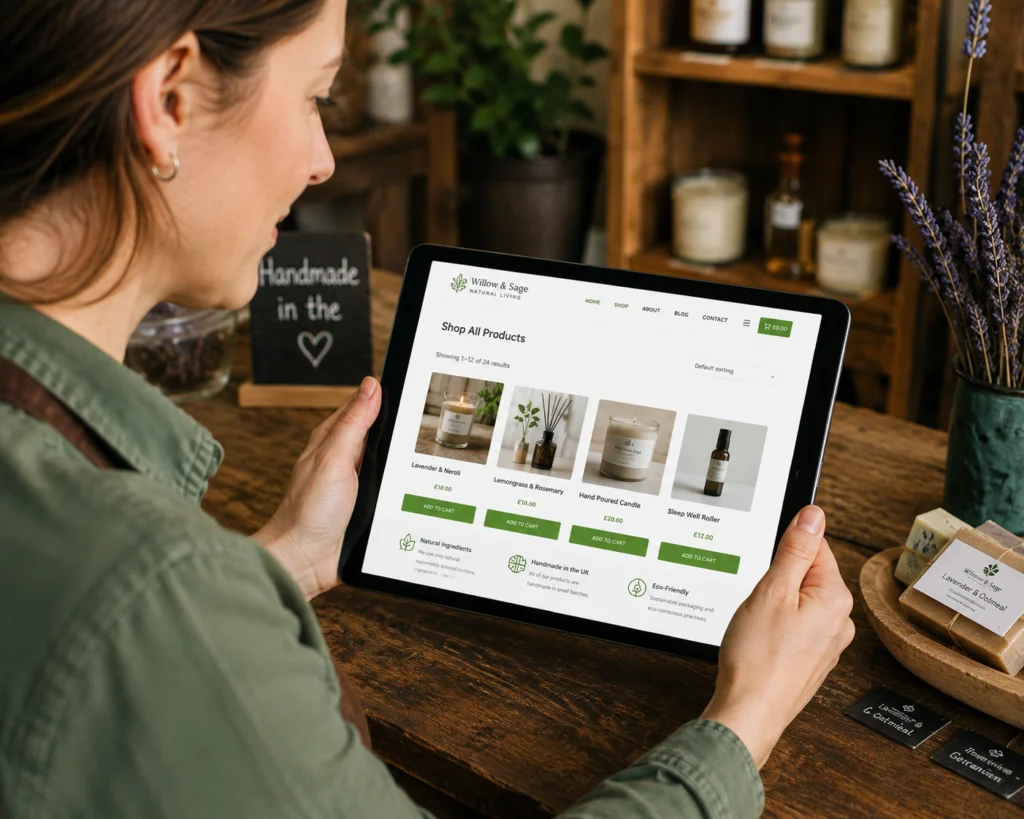
If you’re planning to sell products or services directly from your website, the feature requirements go up significantly. You’ll need a WooCommerce or equivalent setup, product pages, a shopping cart, payment gateway integration (Stripe, PayPal, or similar), and additional SSL considerations for transaction security. The good news is that affordable ecommerce web design services in the UK have become much more accessible in recent years. A properly set up small online shop no longer requires a £5,000 agency project. The key is making sure the provider includes proper product page SEO, fast image loading for product photos, and a clear checkout flow that doesn’t confuse customers on mobile.
What You Pay vs What You Actually Get: Price Breakdown
One of the biggest frustrations for UK small business owners is discovering that the “cheap” option ended up costing just as much once extras were added. Here’s a realistic picture of total costs across different provider types for a standard small business website with all the features it actually needs.
Table 2: True Cost Comparison for a 5-Page UK Business Website (2026)
| Provider Type | Base Price | SSL Add-On | SEO Add-On | Hosting (Year 1) | Maintenance | Total (Year 1) |
|---|---|---|---|---|---|---|
| Wix / Squarespace | ~£0 | £0 (plan) | Not included | £180/yr plan | DIY only | £180+ (no real SEO) |
| Upwork Freelancer | £400-£600 | £50-£80 | £150-£300 | £100-£150 | £300+/yr | £1,000-£1,400+ |
| Regional Agency | £800-£1,500 | £50+ | £200-£500 | £150-£300 | £400+/yr | £1,600-£2,800+ |
| Cheap Website Designer (Small Business) | £179 | Included | Included (x2) | Included (12 mo) | Included (12 mo) | £179 total |
You can see the full breakdown and compare packages on the pricing page.
Pay Monthly Web Design: Is It Worth It?
For businesses that can’t commit a lump sum upfront, affordable pay monthly website design services are a practical option. You get a fully built site with the same features, spread across monthly payments rather than paid upfront. The important questions to ask before signing up: do you own the website files at the end, what happens if you cancel midway, and is the monthly fee fixed or subject to increases? A clear provider will answer all three without hesitation. Also confirm whether maintenance and hosting are included in the monthly cost or billed separately.
Two UK Businesses That Got This Right in 2026
These are two real examples of local UK businesses that prioritised features over flashy promises and saw measurable results within months.
Case Study 1 — Hertfordshire
Local Plumbing Business, Hertfordshire
A sole-trader plumber in Hertfordshire had no website and relied entirely on word of mouth. After launching a 5-page responsive site with proper on-page SEO and a Google Business Profile link, he started ranking for “emergency plumber Hertfordshire” within 10 weeks. He received his first inbound web enquiry in week three, before the site had even been fully indexed. The site cost him £179, including hosting, SSL, and 12 months of maintenance.
Case Study 2 — Birmingham
Start-up Skincare Brand, Birmingham
A two-person skincare brand selling handmade products launched an ecommerce site with WooCommerce, proper product page SEO, and a mobile-first design. Within four months they were ranking for three niche product search terms and had converted enough organic traffic to make back their web design investment three times over. Speed optimisation and clean mobile checkout were the two features they credited most.
Features That Competitors Don’t Talk About (But Should)
Most competitor blogs in this space cover the obvious stuff: responsive design, SSL, fast loading. What they tend to skip over are the details that actually separate a site that performs from one that just exists. A WhatsApp floating button, for example, has a measurable impact on conversion rates for local service businesses in the UK, where customers often prefer a quick message over filling out a form. Business email addresses (not Gmail accounts) add credibility and are something many budget providers skip. Free logo design as part of the package is genuinely useful for newer businesses that don’t yet have a visual identity sorted. Twelve months of included maintenance matters too. WordPress plugins and themes need regular updates, and a site that hasn’t been touched in six months is increasingly vulnerable to security issues. WordPress maintenance services that cover this automatically remove one more thing from your plate as a business owner.
- WhatsApp floating button for direct mobile contact
- Business email addresses (not Gmail) on your own domain
- Free logo design if you don’t have one yet
- Google Search Console set up and site submitted on launch day
- 12 months of included maintenance (plugin and security updates)
- Clear handover process with access to all files and credentials
The features that most providers charge extra for are the same ones that decide whether your site actually gets found on Google and converts visitors into customers.
Frequently Asked Questions
What features should be included in an affordable web design package in the UK?
A proper UK web design package should include responsive design, SSL certificate, on-page SEO, speed optimisation, hosting, a contact form, and at least 12 months of maintenance. These are not add-ons, they should come as standard.
Is a mobile-friendly website important for UK small businesses in 2026?
Yes, absolutely. Over 65% of web traffic in the UK now comes from mobile devices. Google’s mobile-first indexing means your rankings depend on how well your site performs on a phone, not just a desktop.
Do affordable web design packages in the UK include SEO?
They should. On-page SEO, including proper heading structure, meta titles, image alt text, and fast loading speed, should be built into the design from day one. Some providers charge extra for this, so always confirm before signing up.
How much does a fully featured small business website cost in the UK?
A properly built 5-page website with SEO, hosting, SSL, and maintenance typically costs between £150 and £400 in the UK, depending on the provider. Agencies often charge significantly more for the same output.
What is the difference between a responsive website and a mobile-friendly website?
A mobile-friendly website has a separate mobile version. A responsive website automatically adapts its layout to any screen size using fluid grids and flexible elements. Responsive design is the current standard and is what Google recommends.
Conclusion
Knowing what to expect from affordable web design services in the UK puts you in a much stronger position when comparing providers. The features covered here, responsive design, SSL, speed optimisation, on-page SEO, included hosting and maintenance, should not be optional extras. In 2026, they’re the standard. If a provider can’t clearly tell you what’s included at your price point, or if their quote grows significantly once you start asking about SEO and hosting, that’s your signal to look elsewhere. You can check the full feature list and see real examples of completed work in the portfolio.
See Everything That’s Included Before You Commit
No hidden costs, no confusing add-ons. Check the full feature breakdown and get your site started today.Get Started Today