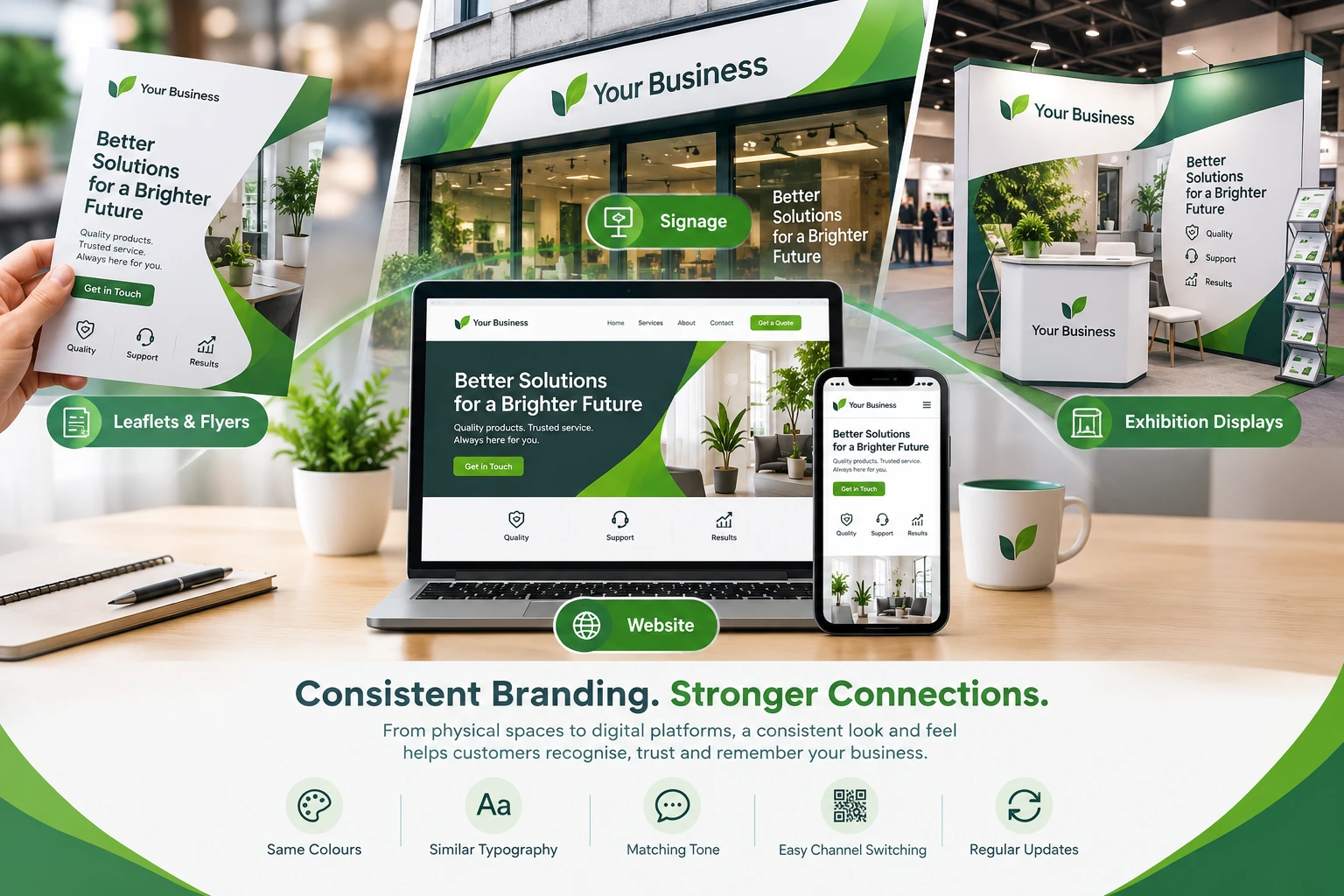
Customers rarely encounter a business through just one channel. They might discover it through a leaflet, see signage outside its premises, and then visit its website before deciding whether to make contact or buy something. When each of these touchpoints looks noticeably different, the overall brand can feel less consistent.
Matching physical marketing materials to a website helps create a more recognisable identity. It does not require every item to be identical, but there should be enough consistency to make it clear that everything comes from the same business.
Start With Your Core Visual Identity
Before producing new marketing materials, identify the elements that define the brand online. These will usually include the logo, main colours, fonts, photography style and any recurring design features. From there, think about how those elements could translate into physical spaces. A distinctive colour palette could be carried across window graphics, signage or exhibition displays, for example, while materials available through Soyang Europe can open up different options for bringing digital designs into the real world and attracting customers.
The aim is not to make every piece of marketing look identical. Instead, customers should be able to move from seeing a sign or display to visiting the website and immediately recognise that they are dealing with the same business.
Keep Colours as Consistent as Possible
Colours that look good on a computer or mobile screen do not always translate perfectly to printed materials. Screens display colour using light, while printing processes reproduce it using inks, which can create noticeable differences.
Businesses planning significant print runs should check proofs or samples before approving the finished material. Keeping records of agreed colour specifications can also make it easier to achieve similar results across future signs, posters and other printed items.
Use Similar Typography
Typography can be another strong connection between physical and digital marketing. If a website uses distinctive fonts, consider whether they can also be used effectively in printed designs. Readability should still come first. A typeface that works for a large website heading may not necessarily be suitable for detailed information on a small leaflet. Where the exact font is impractical, choosing a complementary alternative can maintain the overall feel of the brand.
Match the Tone of Your Messaging
Visual consistency is only part of the picture. The language used across marketing channels should also sound as though it comes from the same organisation. A website written in a friendly, informal style can feel disconnected from a leaflet filled with formal corporate language. Establishing a basic tone of voice helps everyone producing content understand how the business should communicate.
Calls to action should also be consistent. If the website encourages customers to request a quote, book an appointment, or browse products, physical materials can direct people towards the same next step.
Make It Easy to Move Between Channels
Physical marketing can act as a direct route to a digital experience. A clear web address or QR code can help customers move from a poster, brochure, or display to the relevant online page, but avoid sending everyone to the homepage when a more specific destination is available. Promotional material for a particular service, for example, can point customers directly to the corresponding service page.
Review Your Branding Regularly
Websites evolve over time, but physical marketing materials can remain in use for years. This can gradually create inconsistencies. Whenever a website receives a substantial redesign, review printed and physical materials at the same time. Updating outdated colours, logos and messaging helps ensure customers receive a consistent impression wherever they encounter the business.
A joined-up approach makes both digital and physical marketing feel more deliberate. When customers can immediately connect a sign, leaflet or display with the website they later visit, the brand becomes easier to recognise and remember.