Behind every business that is growing steadily online in 2026, there is usually a skilled website designer who understood that a good-looking site and a high-performing site are two completely different things. In the UK, over 65% of web traffic now arrives on mobile devices, and Google’s ranking algorithm is more sophisticated than it has ever been. Businesses that invested in proper web design years ago are reaping the rewards today. Those that cut corners with free builders or offshore template sites are now wondering why their competitors are showing up on page one while they are nowhere to be found.
What Is the Role of a Website Designer in a Business?
A website designer is responsible for creating the visual layout, user experience, and technical structure of a website so it attracts visitors, keeps them engaged, and converts them into customers or leads. The role sits at the intersection of creativity and technical knowledge — it is not enough to make something look good if it loads in 6 seconds or breaks on a Samsung Galaxy. And it is not enough to build something technically clean if visitors find it confusing, ugly, or hard to navigate. In a business context, a website designer is essentially building your most active sales tool. It represents your brand at 3am when you are asleep, and it is often the first impression a potential customer ever gets of you.
How Has the Role of Web Designer Changed in 2026?
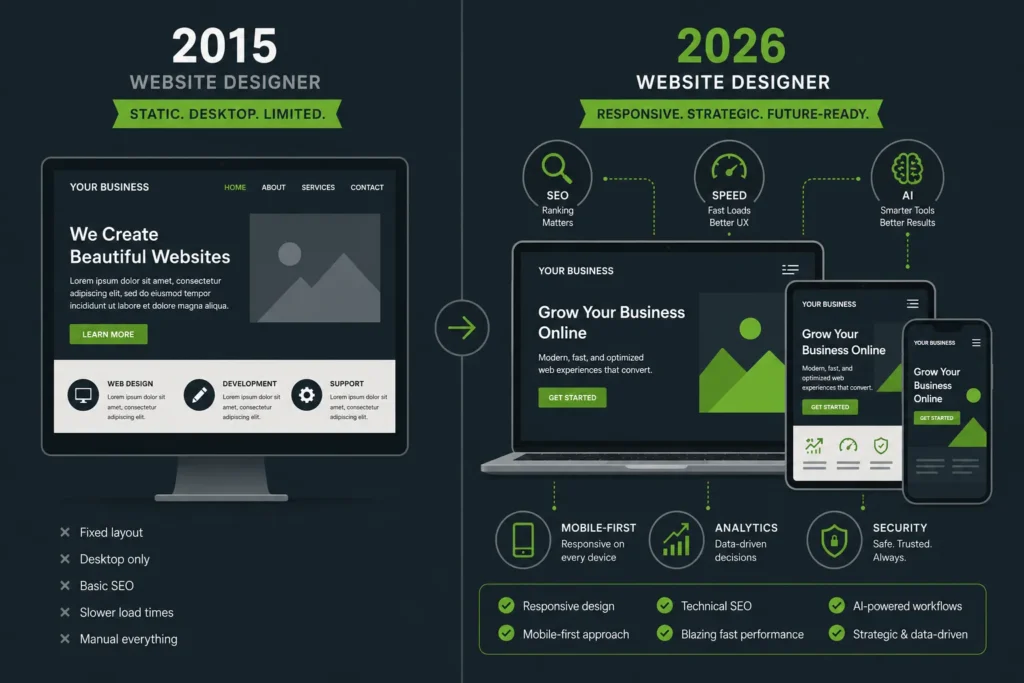
The role has expanded significantly beyond visual design, now requiring a working understanding of Core Web Vitals, schema markup, mobile-first development, and increasingly, how AI-generated search results pull content from well-structured pages. In 2026, a website designer who does not understand SEO architecture is only doing half the job. Google’s AI Overviews now pull featured answers from pages that are fast, clearly structured, and marked up correctly — which means the designer’s technical decisions directly affect how much free search traffic a business receives. Generative UI is another shift that has changed how designers think about page structure. Users increasingly interact with AI-assisted interfaces that require content to be modular, scannable, and semantically clear rather than buried inside long paragraphs or hidden behind animations that delay loading.
What Skills Does a Professional Website Designer Need?
A professional website designer in the UK needs a solid mix of visual design skills, front-end development knowledge, SEO understanding, and user experience thinking. On the design side, that means typography, colour theory, layout balance, and brand consistency. On the technical side, it means clean HTML and CSS, responsive grid systems, image compression, page speed optimisation, and an understanding of how CMS platforms like WordPress actually work under the hood. The UX side — understanding how people actually use a website rather than how the designer imagines they will — is where a lot of otherwise talented designers fall short. Heatmaps, user journey mapping, and conversion rate thinking are now considered standard parts of the professional skill set, not optional extras.
Why Does a Business Need a Website Designer Rather Than a DIY Builder?
DIY website builders are genuinely fine for a hobby project or a temporary placeholder page, but they create serious limitations for any business that wants to rank on Google, load quickly on mobile, and present a credible brand to potential customers. The SEO defaults on platforms like Wix and Squarespace are weak, the page speed scores are often poor, and the templates are shared by hundreds of thousands of other sites — which means your site looks like everyone else’s before a single visitor even lands on it. A professional website designer builds something bespoke, optimised from the ground up, and technically clean in a way that a drag-and-drop interface simply cannot replicate. The difference shows up in your Google ranking, in your bounce rate, and in how many visitors actually get in touch versus clicking straight back to the search results.
How Much Does a Website Designer Cost in the UK?
Website designer costs in the UK range widely depending on experience, agency size, and what is actually included in the price. The table below compares what different provider types typically deliver and what you can expect to pay, so you can make a properly informed decision rather than just going with the cheapest quote.
| Provider Type | Pages | SEO Included | Hosting | Maintenance | Typical UK Price |
|---|---|---|---|---|---|
| Cheap Website Designer (Starter) | 1 Landing Page | Yes, on-page | 12 months free | 12 months included | £69 |
| Cheap Website Designer (Small Business) | Up to 5 pages | Yes, 2x optimised | 12 months free | 12 months included | £179 |
| Cheap Website Designer (Elite) | Up to 20 pages | Yes, 4x optimised | 12 months free | 12 months included | £239 |
| UK Freelance Designer | 2-5 pages | Rarely included | Not included | Paid extra | £400 – £900 |
| Mid-Range UK Agency | 5-10 pages | Basic only | Sometimes | Monthly retainer | £1,200 – £3,000 |
| Premium UK Agency | 10-20+ pages | Partial | Usually | Monthly retainer | £4,000 – £10,000+ |
For a full breakdown of what is covered at each level, the pricing page gives a clear picture of exactly what is included and why the all-in-one structure saves most UK businesses significant money compared to buying each service separately.
What a Website Designer Does That Directly Affects Your Google Ranking
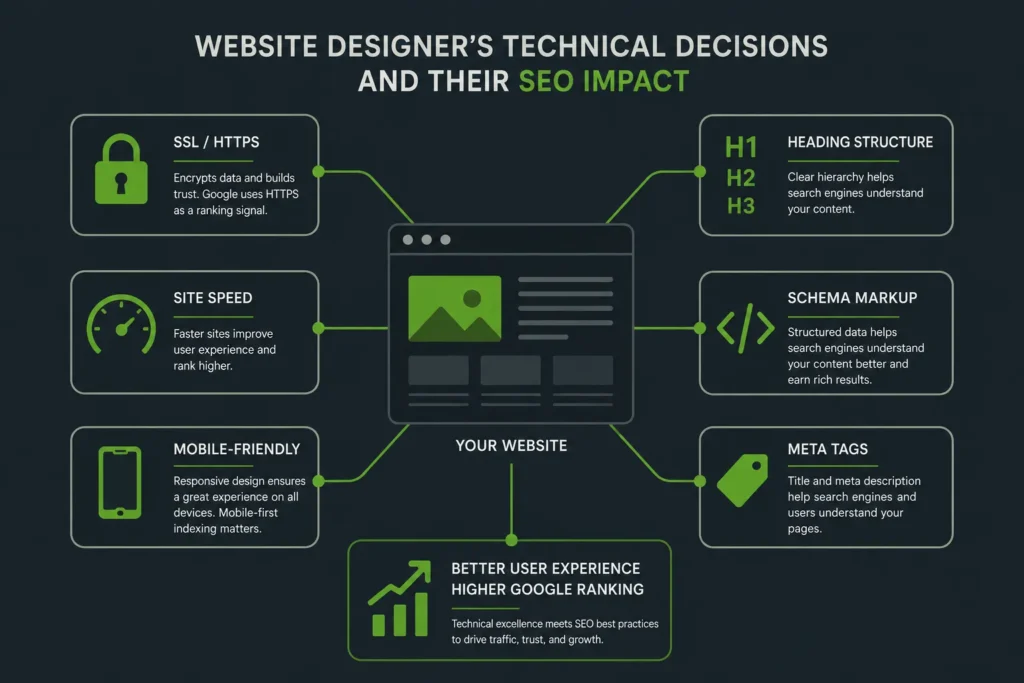
The technical decisions a website designer makes during the build phase have a direct and lasting impact on search performance. These include heading structure (H1, H2, H3 in the correct order), meta title and description setup, image alt text, internal linking, URL structure, page speed, SSL implementation, and schema markup. Getting these right from the start means Google can crawl, understand, and rank your site from day one. Getting them wrong creates a frustrating situation where a site looks perfectly fine to a human visitor but is essentially invisible to search engines. Many UK businesses are in this position right now, paying for Google Ads because their organic ranking never materialised — not because of a lack of content, but because the site was not built properly in the first place. The affordable SEO services for small businesses page covers how to address these issues if your current site is already live but underperforming.
The Connection Between Web Design and User Experience
User experience design is the part of a website designer’s role that most business owners do not think about until something goes wrong. UX is the reason visitors either stay and explore or leave within 10 seconds. It covers navigation clarity, button placement, page layout, loading feedback, and the overall journey a visitor takes from landing on the homepage to completing an action like filling in a contact form or making a purchase. Poor UX is often invisible to the site owner because they already know where everything is. But for a first-time visitor, a confusing navigation menu or a form that requires too many steps will silently kill your conversion rate without leaving any obvious trace of why people left. A good website designer tests these journeys and removes friction at every stage, which is ultimately worth more to a business than any amount of visual polish.
Real-World Examples: How a Website Designer Made a Difference in 2026
A Solicitors Firm in Birmingham
A small solicitors firm in Birmingham had been operating on a website built in 2019 that had never been updated for mobile. By mid-2026, over 70% of their traffic was arriving on phones, and the site was nearly unusable on a small screen. After a full rebuild focused on mobile-first responsive design, proper on-page SEO, and a clean contact form above the fold, organic enquiries through the website increased noticeably within the first two months. The firm had been paying for local Google Ads to compensate for the poor organic ranking. After the redesign, they were able to reduce that spend significantly because the organic ranking improved on its own.
A Handmade Jewellery Brand in Cardiff
A one-person jewellery business in Cardiff had been selling through Etsy for four years but wanted to move sales to her own website to avoid the platform fees. The ecommerce site was built with WooCommerce, product schema for Google Shopping integration, and a mobile checkout that passed Core Web Vitals on the first audit. The designer also set up structured data so that individual product listings appeared with star ratings and pricing directly in Google search results. Within eight weeks of launch, the site was generating direct sales and the owner was no longer paying Etsy’s 6.5% transaction fee on every order. You can see examples of similar finished projects on the portfolio page to get a sense of the quality and range of work.
WordPress: Why Most Professional Website Designers in the UK Use It
WordPress powers over 43% of all websites globally and remains the go-to platform for professional UK website designers working on small to medium business projects. It gives full control over design, SEO, and functionality without the monthly platform fees that Shopify and Squarespace impose. For businesses that need to grow their site over time — adding pages, changing services, launching a blog — WordPress is far more flexible than any proprietary builder. The affordable WordPress website design services page explains exactly what a properly built WordPress site includes, from the technical setup to the SEO foundations that most template-based alternatives skip entirely.
Feature Checklist: What Should a Professional Website Designer Deliver?
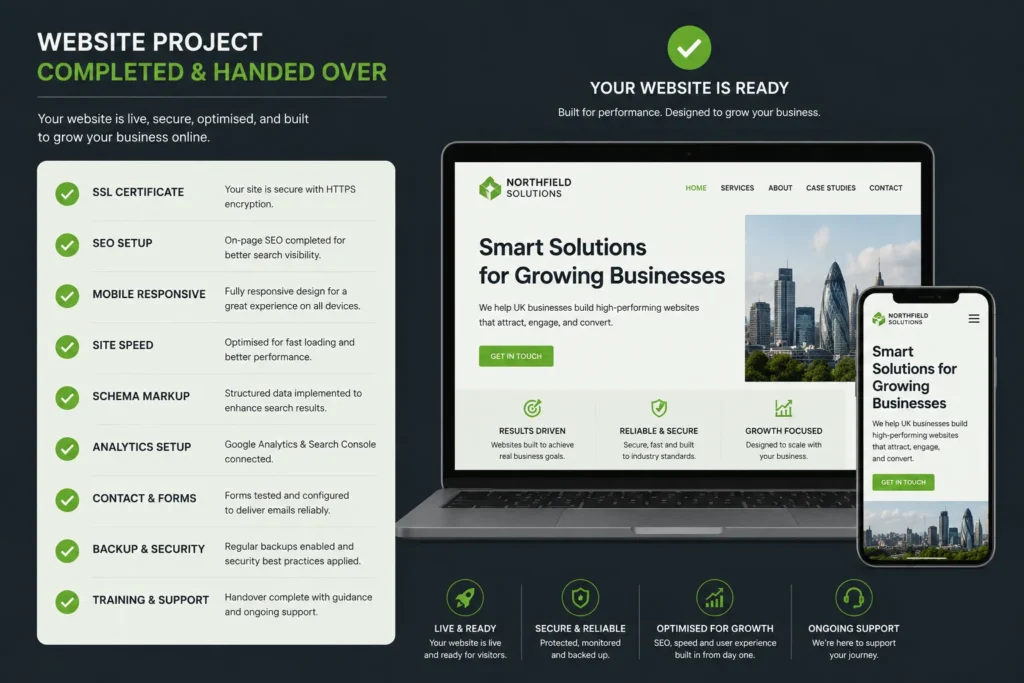
If you are comparing quotes or interviewing potential designers, this checklist covers the deliverables that should be standard in any professional engagement. If a quote does not include these, the gap in price is not a saving — it is a cost you will pay later.
| Deliverable | Why It Should Be Standard | Included at Cheap Website Designer |
|---|---|---|
| Fully Responsive Design | 65%+ of UK traffic is mobile; Google indexes mobile-first | Yes, all plans |
| Free SSL Certificate | Required for HTTPS, browser trust, and ranking | Yes, all plans |
| On-Page SEO Setup | Titles, metas, schema, heading structure from day one | Yes, all plans |
| Speed Optimisation | Core Web Vitals threshold is under 2.5 seconds LCP | Yes, all plans |
| 12 Months Free Hosting | Removes a recurring cost and ensures a managed environment | Yes, all plans |
| Bespoke Design | Unique visual identity that does not match competitors | Yes, Small Business and Elite plans |
| Contact Forms | Converts visitors into leads without requiring a phone call | Yes, all plans |
| WhatsApp Button | Reduces contact friction especially on mobile | Yes, all plans |
| 12 Months Maintenance | Security patches and updates are not optional after launch | Yes, all plans |
| Free Logo Design | Brand consistency from launch without a separate design fee | Yes, if required |
Pay Monthly Web Design: Making a Professional Designer Accessible for Every Budget
Not every UK business can commit to an upfront payment, even at a genuinely affordable price point. The pay monthly website design option removes that barrier entirely. You get the same professional build, the same included features, and the same SEO setup as an upfront package — just spread across monthly payments that fit within a realistic budget. It is particularly useful for sole traders and early-stage businesses that need to be online professionally but cannot justify a lump sum outlay while managing other startup costs.
Post-Launch: What a Website Designer’s Responsibility Looks Like After Go-Live
A common frustration in the UK web design market is that many designers disappear after launch. The site goes live, the invoice is paid, and then the business owner is left managing WordPress updates, plugin conflicts, and security issues they have no idea how to deal with. This is where ongoing maintenance makes a significant practical difference. The WordPress maintenance services available through Cheap Website Designer cover plugin updates, security monitoring, uptime checks, and performance reviews on an ongoing basis — so the business owner can focus on running the business rather than worrying about whether the website is still working properly at 2am.
Frequently Asked Questions About Website Designers
What does a website designer do for a business?
A website designer creates the visual layout, user experience structure, and technical foundation of a business website. Their work covers responsive design, page speed, SEO setup, conversion optimisation, and ongoing maintenance — not just how the site looks. In 2026, a good website designer also understands how Google’s AI search features pull content from well-structured pages, which makes their technical decisions more commercially significant than ever.
How do I know if a website designer is good?
Look for a genuine portfolio of completed UK projects, transparent pricing with no hidden extras, and evidence that their sites pass Core Web Vitals and basic SEO audits. Ask whether SEO, hosting, and maintenance are included in the quoted price. A good designer will be happy to explain their process clearly, show you examples of ranking sites, and give you a realistic timeline before asking for payment.
Should I hire a freelance website designer or an agency?
Both can deliver good results, but the key difference is accountability and support. Agencies typically offer more structured processes, multiple skill sets in one team, and more reliable post-launch support. A freelancer may be more flexible on price but carries the risk of unavailability after launch. For most UK small businesses, an affordable agency with a clear fixed-price package offers the best combination of quality, support, and value.
How long does it take a website designer to build a business site?
A standard 5-page business website takes 7 to 14 working days from a signed brief to launch, assuming the client provides content and any required images promptly. Single landing pages can often be live within 3 to 5 days. Ecommerce builds with product catalogues, custom checkout flows, and payment gateway integration typically take 3 to 5 weeks. Any timeline significantly shorter than these should be treated with caution.
Can a website designer also help with SEO?
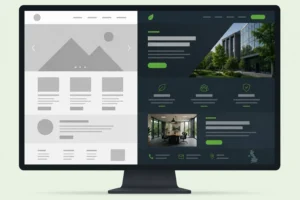
Yes, and the best ones integrate SEO into the build process from the very first wireframe stage rather than treating it as a separate project. On-page SEO covers heading structure, title tags, meta descriptions, URL format, image compression, schema markup, and page speed — all of which are decisions made during the design and development phase. Ongoing SEO work like keyword targeting, content strategy, and link building is a separate service, but having it managed by the same team that built the site avoids the common problem of fixing things that should have been built correctly from the start.
Conclusion: Choosing the Right Website Designer for Your Business in 2026
The right website designer does not just build you a site — they build you an asset that works for your business every hour of every day. In 2026, that means mobile-first design, technical SEO built in from the start, fast load times that meet Google’s standards, and ongoing support that keeps everything running properly after launch. The market is full of options at every price point, but the question to ask is not who is cheapest — it is who delivers the most for a fair price with full transparency on what is included. When you are ready to move forward, get started here and have your business represented online the way it deserves to be.