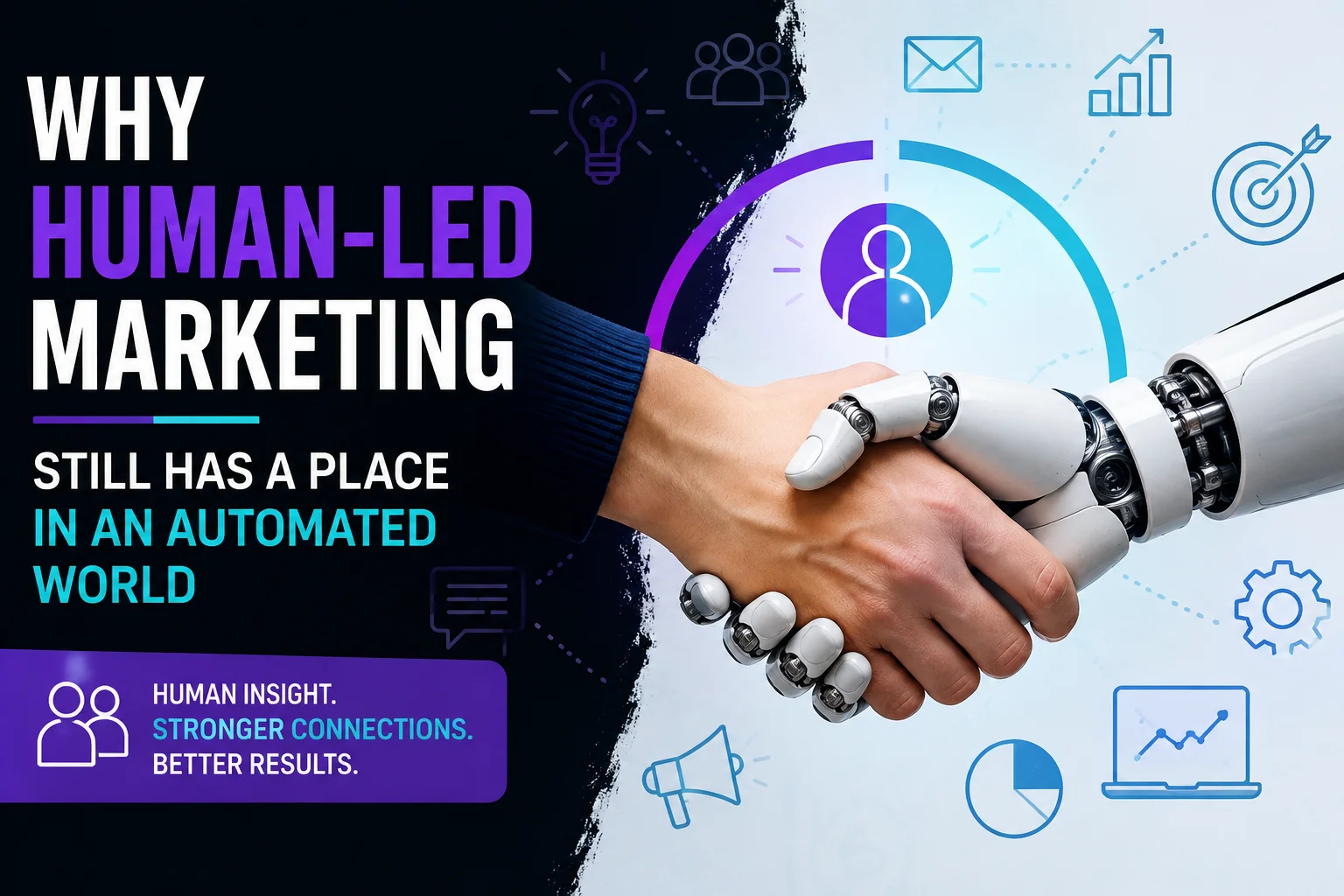
Automation has changed marketing in ways that would have seemed impossible a decade ago. Businesses can now schedule campaigns, generate reports, personalize emails, analyze customer behavior, and even create content at remarkable speed. These tools save time and help teams work more efficiently, but they do not remove the need for human judgment.
The strongest marketing strategies still depend on people who understand audiences, context, emotion, and brand identity. Automation can support the process, but it cannot fully replace the insight and creativity that human marketers bring.
People Understand Nuance
Marketing is rarely as simple as sending the right message at the right time. Tone, cultural context, current events, and audience expectations can all influence how a campaign is received.
Automated systems work by identifying patterns and following instructions. They may recognize that a certain subject line receives more clicks, but they do not always understand why it works or when it may be inappropriate. Human marketers can review the wider context and spot potential issues before a campaign goes live.
This is especially important for brands operating across different regions or customer groups. A message that feels engaging to one audience may seem confusing, insensitive, or overly promotional to another.
Creativity Cannot Be Fully Automated
Automation is excellent at speeding up repetitive tasks, but original ideas still require imagination. Memorable campaigns often come from unexpected connections, personal experiences, and a deep understanding of what people care about.
Technology can produce variations of existing concepts, but human marketers are better placed to challenge assumptions and develop ideas that feel distinctive. They can also decide when a brand should follow a trend and when it should take a different approach.
Without human direction, automated marketing can quickly become predictable. Audiences may begin to notice repeated phrasing, generic visuals, or campaigns that feel disconnected from the brand.
Relationships Still Matter
Many areas of marketing rely on genuine communication and trust. Public relations, partnerships, influencer outreach, and link building all benefit from thoughtful, personalized conversations.
For example, a professional manual backlinks service can use human-led outreach to identify relevant publishers, build relationships, and secure placements that make sense for both the brand and the target website. This approach is very different from relying on bulk, automated messages that may be ignored or marked as spam.
Human involvement helps ensure that outreach feels relevant rather than transactional.
Automation Needs Direction
Marketing tools are only as effective as the strategy behind them. A platform can automate email sequences, but someone must decide who should receive them, what the messages should say, and what action the campaign is designed to encourage.
Human marketers also need to review performance data and decide what it actually means. A rise in clicks may look positive, but it does not necessarily lead to more sales or stronger customer relationships.
The Best Approach Combines Both
Human-led marketing and automation should not be treated as competing options. The most effective teams use automation to handle routine work while allowing people to focus on strategy, creativity, quality control, and relationships.
Technology can improve speed and scale, but people give marketing its purpose. In an increasingly automated world, brands that maintain a clear human voice are more likely to build trust, stand out, and create lasting connections with their audiences.