Every skilled website designer follows a proven process to make sure what they build looks great, loads fast, and works perfectly on every screen size. In 2026, that matters more than it ever has. Over 65% of web traffic in the UK now comes from mobile devices, and Google ranks sites based on how they perform on phones first — not desktops. If your site is not built with that in mind from the very first line of code, you are starting at a disadvantage before a single visitor even lands on your page.
What Does a Website Designer Actually Do?
A website designer is responsible for both the visual look and the structural performance of a website, combining creative design with technical decisions that affect speed, SEO, and user experience. The role covers everything from choosing layout grids and colour palettes to writing clean code, compressing images, and making sure the site passes Core Web Vitals. It is a much broader job than most business owners realise when they first start looking for someone to build their site. A good designer does not just hand you something that looks nice — they hand you something that works as a marketing tool from the moment it goes live.
How Do Web Designers Make a Website Responsive?
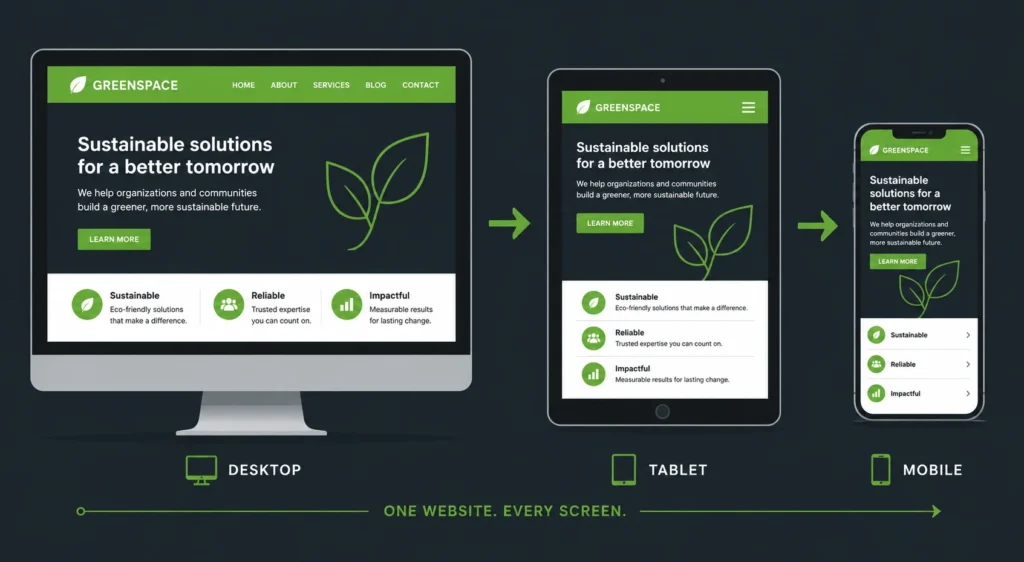
Responsive web design means building a site that automatically adjusts its layout, text size, and images to fit any screen — from a 27-inch monitor to a 5-inch phone screen. This is done using flexible grid systems, CSS media queries, and fluid image sizing rather than fixed pixel widths. The shift to mobile-first development means designers now build the phone version first and scale up to desktop, which is the opposite of how sites were built just five years ago. Getting this right is not just about aesthetics. A layout that breaks on mobile will cause visitors to leave within seconds, which directly damages your Google ranking through higher bounce rates.
The Step-by-Step Process a Professional Web Designer Follows
Most experienced designers work through a structured process rather than just jumping into Photoshop or a page builder. It starts with a discovery phase — understanding the business, its audience, and what the website actually needs to achieve. Then comes wireframing, which is a skeleton layout that maps out where each section lives before any colour or imagery gets added. After client sign-off on the wireframe, the actual design begins, followed by development, testing across devices and browsers, SEO setup, and finally launch. Skipping any of these steps is usually what causes problems down the line — a site that looks fine on a laptop but breaks on iPhone, or a beautiful homepage that Google cannot crawl because the meta data was never set up properly.
What Technical Elements Separate a Good Website From a Great One?
There are several technical layers that separate an average website from one that actually performs. Speed optimisation is the most critical — Google’s WebGPU standards in 2026 expect pages to load in under 2.5 seconds, and every second over that benchmark costs you both rankings and conversions. SSL certificates are non-negotiable; any site without HTTPS is flagged by browsers as “not secure” which immediately destroys visitor trust. Structured data and schema markup help Google understand what your site is about, which increases the chance of appearing in rich results and AI-generated search summaries. Clean URL structures, compressed images, and properly tagged headings (H1, H2, H3 in the right order) are all part of what makes a site genuinely SEO-friendly rather than just claiming to be.
UX Design: Why How a Site Feels Matters as Much as How It Looks
UX design is about making sure visitors can find what they need without thinking too hard about it. That means clear navigation, logical page hierarchy, visible call-to-action buttons, and a layout that guides the eye naturally from one section to the next. Poor UX is the most common reason a technically sound website still does not convert visitors into enquiries or sales. A professional website designer thinks about the visitor’s journey at every stage — what they see first, where they look next, and what friction points might make them click away. Removing those friction points is often more valuable than any amount of visual polish.
How UK Web Designers Price Their Services in 2026
Pricing across the UK web design market varies more than most people expect. A basic freelancer might charge £300 to £600 for a site with no hosting, no SEO, and no aftercare. Mid-range agencies typically charge £800 to £2,500 for a small business site. At the higher end, full-service agencies charge £3,000 to £8,000+ for builds that could realistically be delivered for a fraction of the cost if you choose the right provider. The table below shows how these tiers compare against what you actually get.
| Provider Type | Pages | SEO Included | Hosting | Maintenance | Typical UK Price |
|---|---|---|---|---|---|
| Cheap Website Designer (Small Business) | Up to 5 pages | Yes, on-page (2x optimised) | 12 months free | 12 months included | £179 |
| Cheap Website Designer (Elite) | Up to 20 pages | Yes, on-page (4x optimised) | 12 months free | 12 months included | £239 |
| Typical UK Freelancer | 1-5 pages | Rarely | Not included | Paid extra | £300 – £600 |
| Mid-Range UK Agency | 5-10 pages | Basic only | Sometimes | Monthly retainer | £800 – £2,500 |
| Premium UK Agency | 10-20+ pages | Partial | Usually | Monthly retainer | £3,000 – £8,000+ |
You can compare all current packages in detail on the pricing page — including what is included at each level and why the all-in-one approach saves most small businesses significant money compared to piecing services together separately.
What Tools and Technologies Do Web Designers Use?
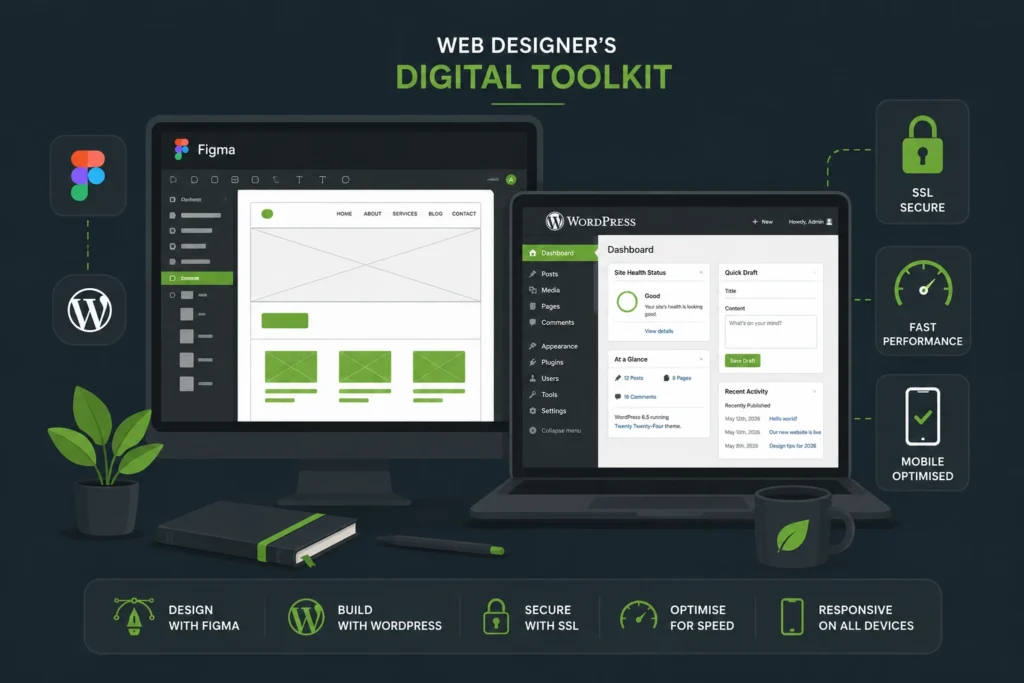
In 2026, most professional UK web designers work primarily with WordPress for small to medium business sites because it offers the best combination of flexibility, SEO capability, and ease of ongoing management. Page builders like Elementor or Bricks Builder are used to speed up the design process, while tools like Figma handle wireframing and client sign-off before development begins. For ecommerce, WooCommerce is the dominant platform for UK businesses under £1m in annual revenue because it avoids the monthly platform fees that Shopify charges as your product catalogue grows. If you want a site built on WordPress specifically, the affordable WordPress website design services page covers exactly what is included and why it remains the most practical choice for UK SMEs.
Feature Comparison: What a Professional Web Design Service Should Include
Not all web design quotes cover the same scope of work, which is why two quotes for “a 5-page website” can differ by thousands of pounds. This table gives you a clear view of what any serious web design service should be delivering, and what is included as standard rather than as a paid extra.
| Feature | Why It Matters | Included at Cheap Website Designer |
|---|---|---|
| Fully Responsive Design | Mobile accounts for 65%+ of UK traffic | Yes, all plans |
| Free SSL Certificate | Required for browser trust and Google ranking | Yes, all plans |
| On-Page SEO Setup | Determines if Google can find and rank your site | Yes, all plans |
| Speed Optimisation | Affects Core Web Vitals and bounce rate | Yes, all plans |
| 12 Months Free Hosting | Saves £100-£300/year in separate hosting costs | Yes, all plans |
| Contact Forms | Converts visitors into leads without a phone call | Yes, all plans |
| WhatsApp Floating Button | Increases direct customer contact | Yes, all plans |
| Free Logo Design | Brand consistency from launch day | Yes, if required |
| 12 Months Maintenance | Security patches, updates, and uptime monitoring | Yes, all plans |
| Bespoke Design (not a template) | Avoids duplicate design with competitor sites | Yes, Small Business and Elite plans |
Real-World Examples: How UK Businesses Benefited in 2026
A Plumbing Business in Leeds
A solo plumber in Leeds had been using a free website builder for three years with almost no organic traffic. After switching to a professionally built, SEO-optimised site with proper on-page structure and a Google Business Profile connection, the business started appearing in local map pack results for “emergency plumber Leeds” within eight weeks of launch. Call volume from the website increased noticeably in the first month. The full site cost less than what the business had been spending on printed flyers per quarter.
A Kids Clothing Brand in Bristol
A Bristol-based children’s clothing startup launched their ecommerce site through a professional design service after getting a quote of over £2,800 from a local agency for a WooCommerce build. By choosing a fixed-price package instead, they saved over £2,000 and launched in under three weeks. The site was fully responsive, passed Core Web Vitals on the first audit, and generated its first organic sale through Google search within 45 days — without running any paid ads. Their ecommerce web design was set up with proper product schema from the start, which helped Google display star ratings directly in search results.
The Role of SEO in the Web Design Process
A lot of web designers treat SEO as an afterthought — something you add once the site is built. That is the wrong way round. The most effective approach is to build SEO into the architecture from the very first wireframe stage. That means deciding on URL structure, heading hierarchy, page speed targets, and internal linking before a single pixel is designed. If your current site was built without SEO in mind, the affordable SEO services for small businesses page covers how to address the most common issues without rebuilding the entire site from scratch.
Pay Monthly Options: Making Professional Web Design Accessible
Not every business has the budget to pay for a full website build upfront, even at affordable prices. That is why the pay monthly website design option makes a genuine difference for startups and sole traders who need a professional presence without a large initial outlay. You get the same quality build and the same included features — just spread across manageable monthly payments. It is a practical solution for businesses that are growing but not yet at the stage where a large upfront spend makes sense.
What Happens After Your Website Goes Live?
Launch day is not the finish line — it is the starting point. Websites need ongoing attention to stay secure, fast, and functional. WordPress updates, plugin patches, security monitoring, and content changes are all part of keeping a site working properly over time. Ignoring maintenance is one of the most common reasons small business websites get hacked, go offline, or start loading slowly. The WordPress maintenance services available through Cheap Website Designer cover all of this as part of a managed service, so you are not left figuring out technical issues on your own after the designer has moved on to their next client.
Frequently Asked Questions About Web Design
How does a website designer make a site mobile-friendly?
A website designer makes a site mobile-friendly by using a responsive grid layout, CSS media queries, and fluid image sizing that adjusts automatically to any screen size. In 2026, the standard approach is mobile-first development — building the phone layout first, then scaling up to tablet and desktop. Sites that are not built this way will score poorly on Google’s mobile usability test and rank lower in search results.
How long does it take a web designer to build a website?
A standard 5-page small business website typically takes 7 to 14 working days from brief to launch, assuming content and images are provided on time. More complex builds with ecommerce functionality or custom features can take 3 to 6 weeks. Rush timelines are possible but usually come at an extra cost and increase the risk of errors being missed before launch.
What should I look for when hiring a website design company?
Look for a web design company that shows a genuine portfolio of completed UK projects, provides clear pricing with no hidden costs, includes SEO setup as standard, and offers post-launch support. Red flags include vague quotes without itemised scope, no portfolio or only generic template examples, and agencies that treat hosting and maintenance as expensive monthly add-ons rather than part of the package.
Does responsive web design affect my Google ranking?
Yes, directly. Google uses mobile-first indexing, which means it primarily crawls and ranks the mobile version of your site. A site that is not properly responsive will score lower on Core Web Vitals, have a higher bounce rate from mobile users, and rank below competitors whose sites are properly optimised. In competitive local markets, the difference can be the gap between appearing on page one and not appearing at all.
Can a web designer also handle my SEO?
A good web designer will build a site that is structurally SEO-ready from the start, covering on-page elements like title tags, heading hierarchy, meta descriptions, schema markup, and page speed. Ongoing SEO — keyword targeting, content strategy, link building, and rank tracking — is usually a separate service. Having both handled by the same provider is the most efficient approach because it avoids the common situation where SEO has to fix things the designer built incorrectly.
Conclusion: What Makes a Website Designer Worth Hiring in 2026
A professional website designer does far more than make your business look good online. They build a technical foundation that affects how fast your site loads, how easily Google finds it, and how well it converts visitors into real customers. The process matters, the tools matter, and the post-launch support matters just as much as the design itself. If you want to see what a properly built, SEO-ready business website looks like before making a decision, the portfolio is a good place to start — and when you are ready, you can get started with a package that suits your budget and your goals.